Exceptional objects
Wereldmuseum Amsterdam explores how art, culture and history are connected. The collection brings together stories from different parts of the world and shows how themes such as identity, colonialism, migration and cultural exchange continue to influence life today.
On this page, a number of highlights from the collection are featured. From historical objects to contemporary artworks, each highlight tells its own story and offers a new perspective on the world. Together, they give an impression of the rich and diverse collection that can be seen at Wereldmuseum Amsterdam.
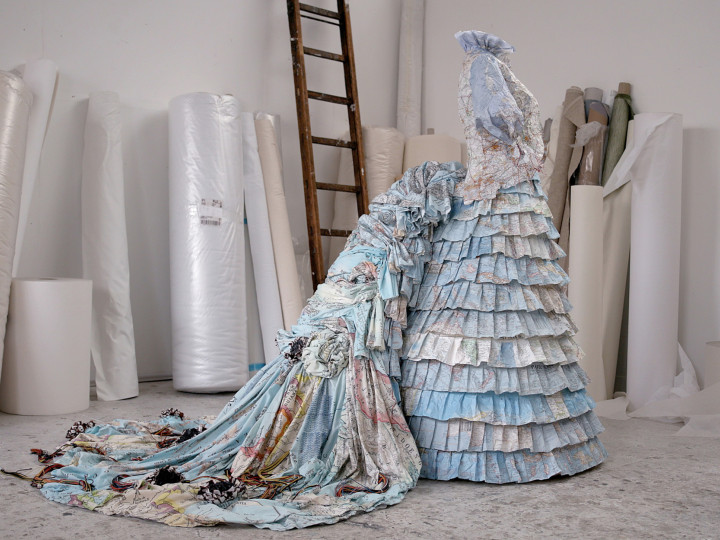
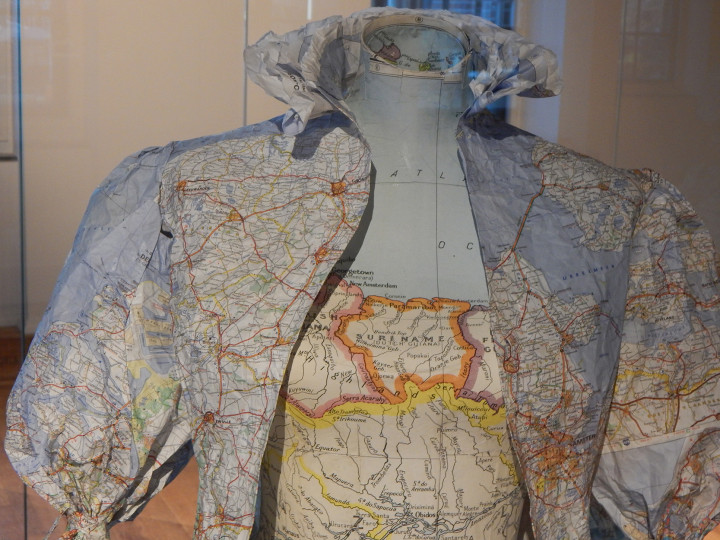
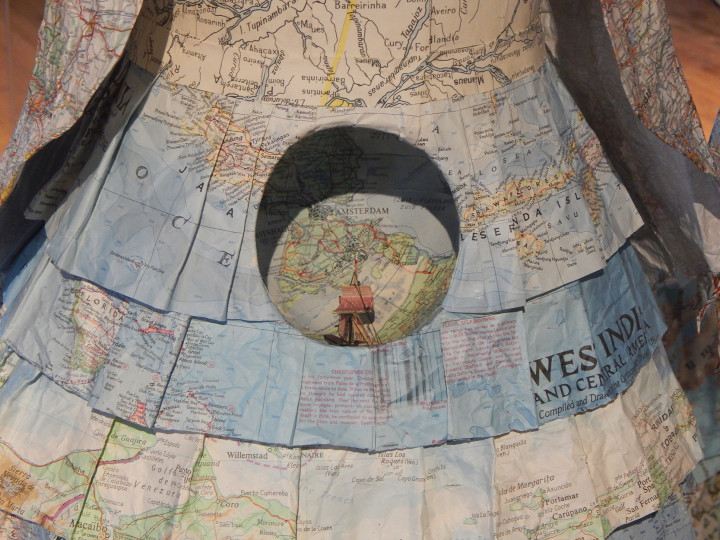
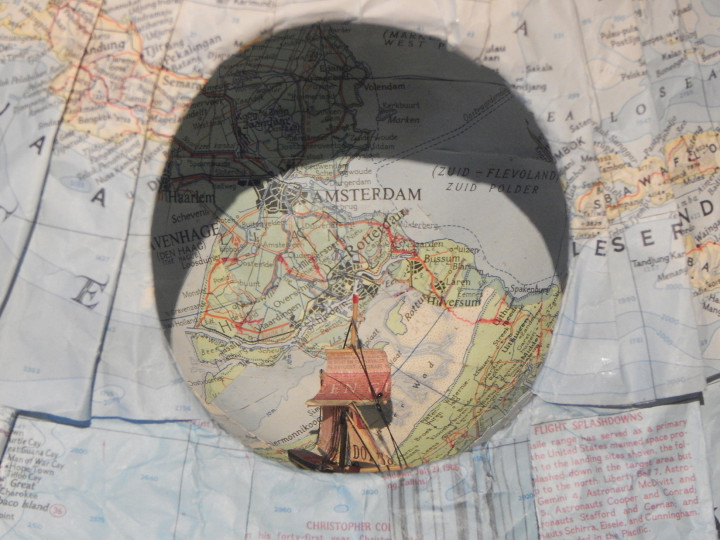
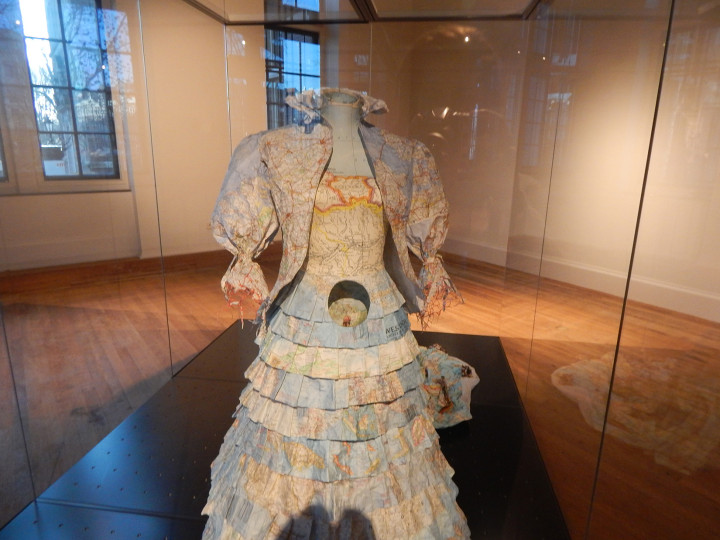
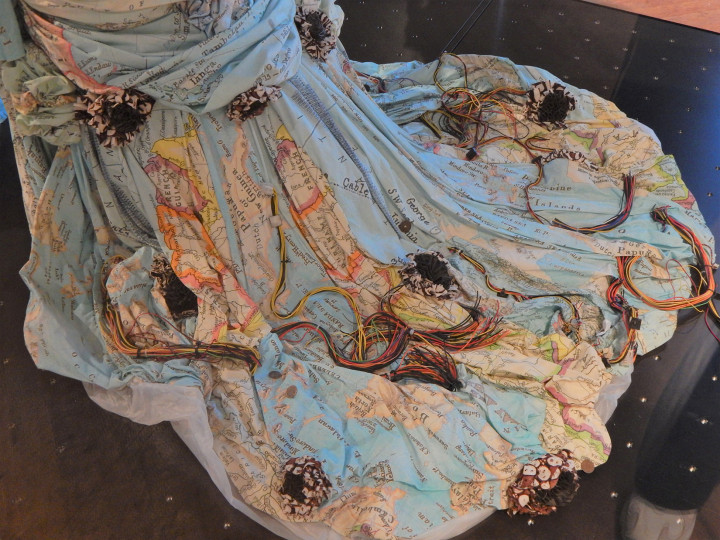
This remarkable dress was created by British artist Susan Stockwell in 2019, commissioned by Wereldmuseum. The work explores how the Dutch colonial past continues to shape the world today. Stockwell expressed this theme through a dress, inspired by various historical fashion periods and constructed from maps.
The maps refer not only to countries and territories, but also to trade, borders and power relations. The work incorporates maps of former Dutch colonies, including Suriname, Indonesia and the Caribbean.
The dress contains several symbolic references. The red roads and highways appear to flow like blood along the sleeves. At the waist is a ship with a sail made from an Antillean banknote, referring to trade and the economic interests connected to the colonial system.
The long train of the dress is inspired by the Surinamese angisa, a traditional headscarf. By bringing together fashion, maps and textiles, Stockwell explores territory not only as land, but also the human body as a place where history, identity and power leave their traces.
On view in Our Colonial Inheritance, inventory number 7175-1.
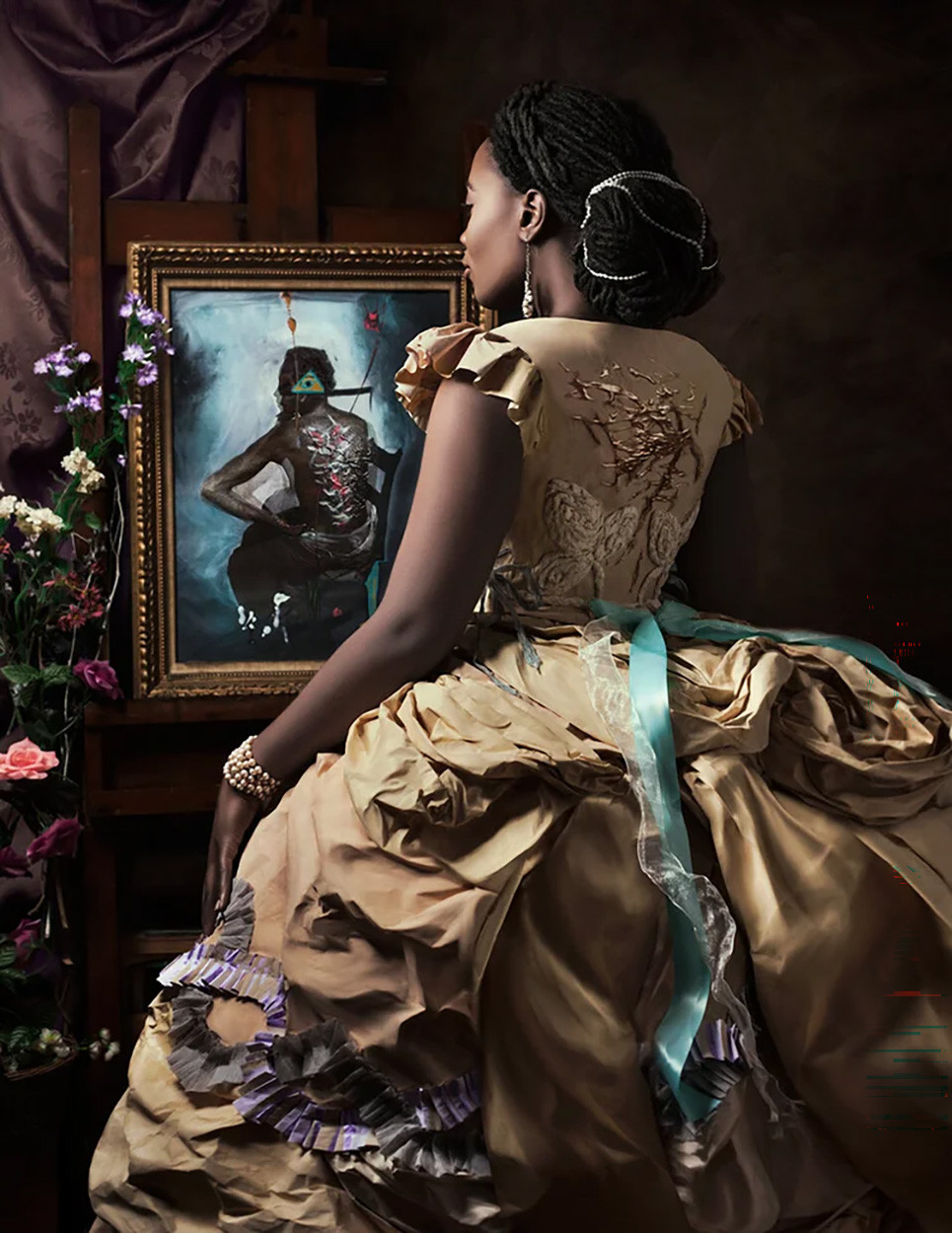
This 2017 work by Haitian-American artist Fabiola Jean-Louis is part of the photo series Rewriting History. In the photograph, a young woman, Beauvoir, looks at a framed portrait of an enslaved man.
The portrait is based on a famous photograph from 1863 of Gordon, an enslaved man from Louisiana who escaped slavery and whose back was covered in scars caused by whipping. This photograph was used by abolitionists as evidence of the brutality of slavery. In Jean-Louis’s work, these scars reappear in the embroidery on the back of Beauvoir’s dress.
In this way, the artist shows how the consequences of slavery can still be visible and deeply felt generations later. But Jean-Louis does not portray the woman as a victim: she is strong, because she is still here.
On view in Our Colonial Inheritance, inventory number 7243-1.
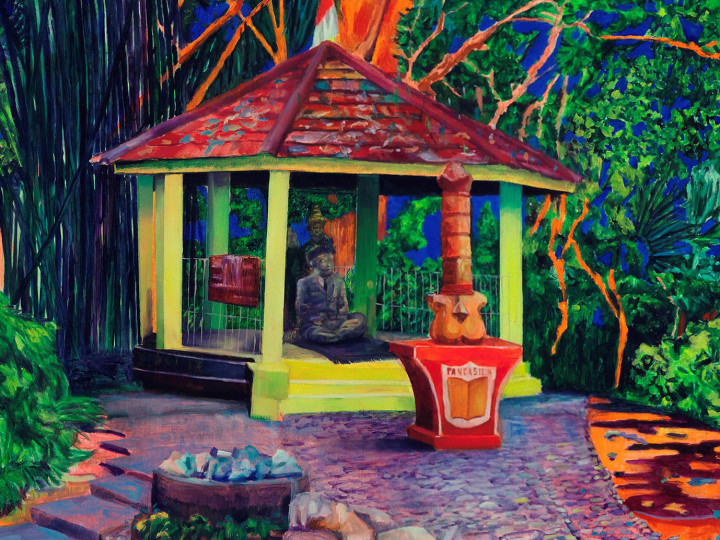
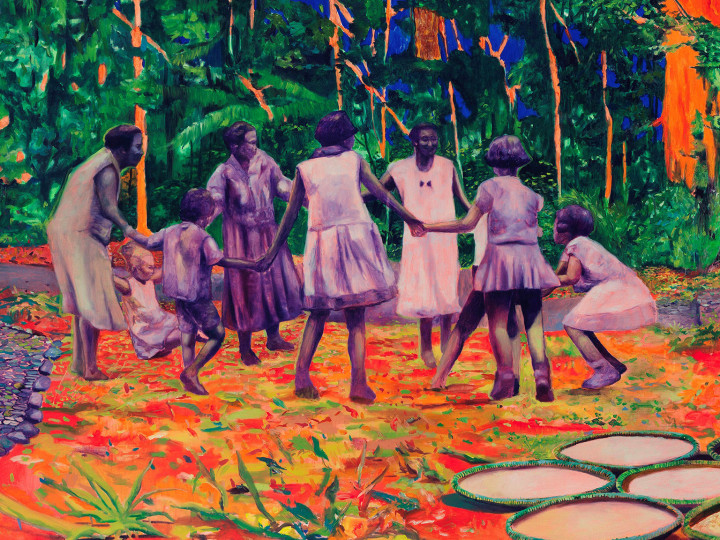
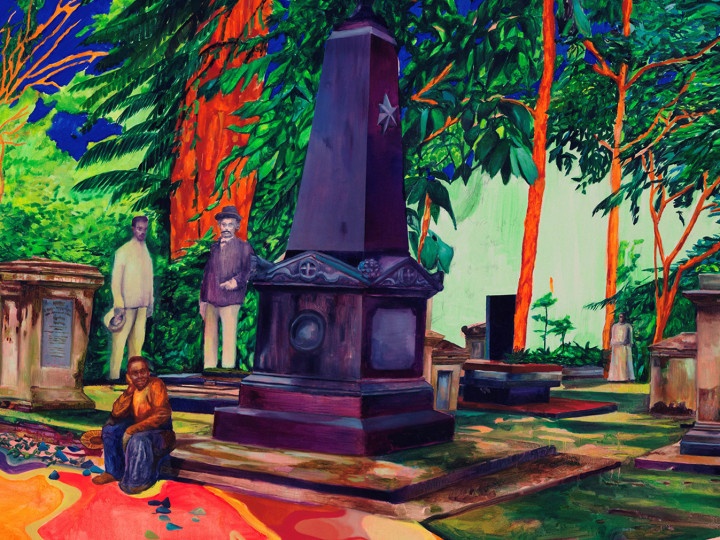
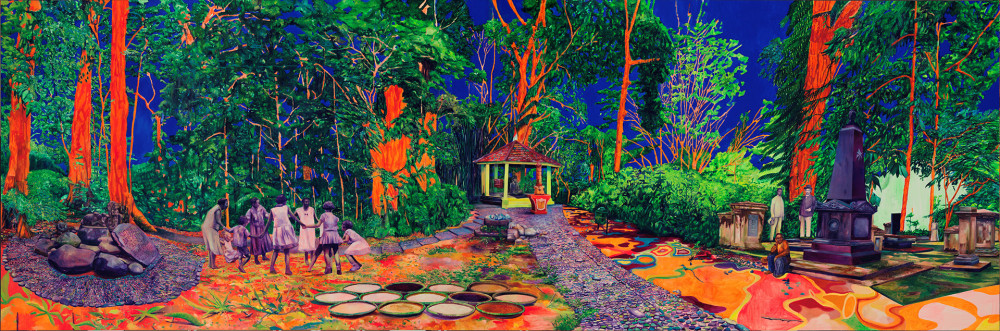
Ruwatan Tanah Air Beta, loosely translated as “Purifying My Homeland,” is a painting by Indonesian artist Zico Albaiquni from 2019. The title refers to a ruwatan, a traditional cleansing ritual from West Java. Albaiquni had a ruwatan performed in the botanical garden of Bogor. This ritual became the starting point for his research into the history of this place and the different stories connected to it.
The botanical garden of Bogor has a long history. For the Sundanese people, the area had already been an important spiritual place for centuries. During the colonial period, a botanical garden was established there. After Indonesian independence, the garden became connected to the history and identity of the new Indonesian republic. In this painting, Albaiquni brings these different historical layers together.
The cemetery shown on the right side of the painting was established during the colonial period. The group of sculptures on the left refers to the period before the botanical garden was created, when the area was an important spiritual site. President Sukarno, seated in the pavilion, symbolises the Republic of Indonesia. In this way, Albaiquni shows how one place can be given new meaning again and again by different communities.
On view in Our Colonial Inheritance, inventory number 7224-1.
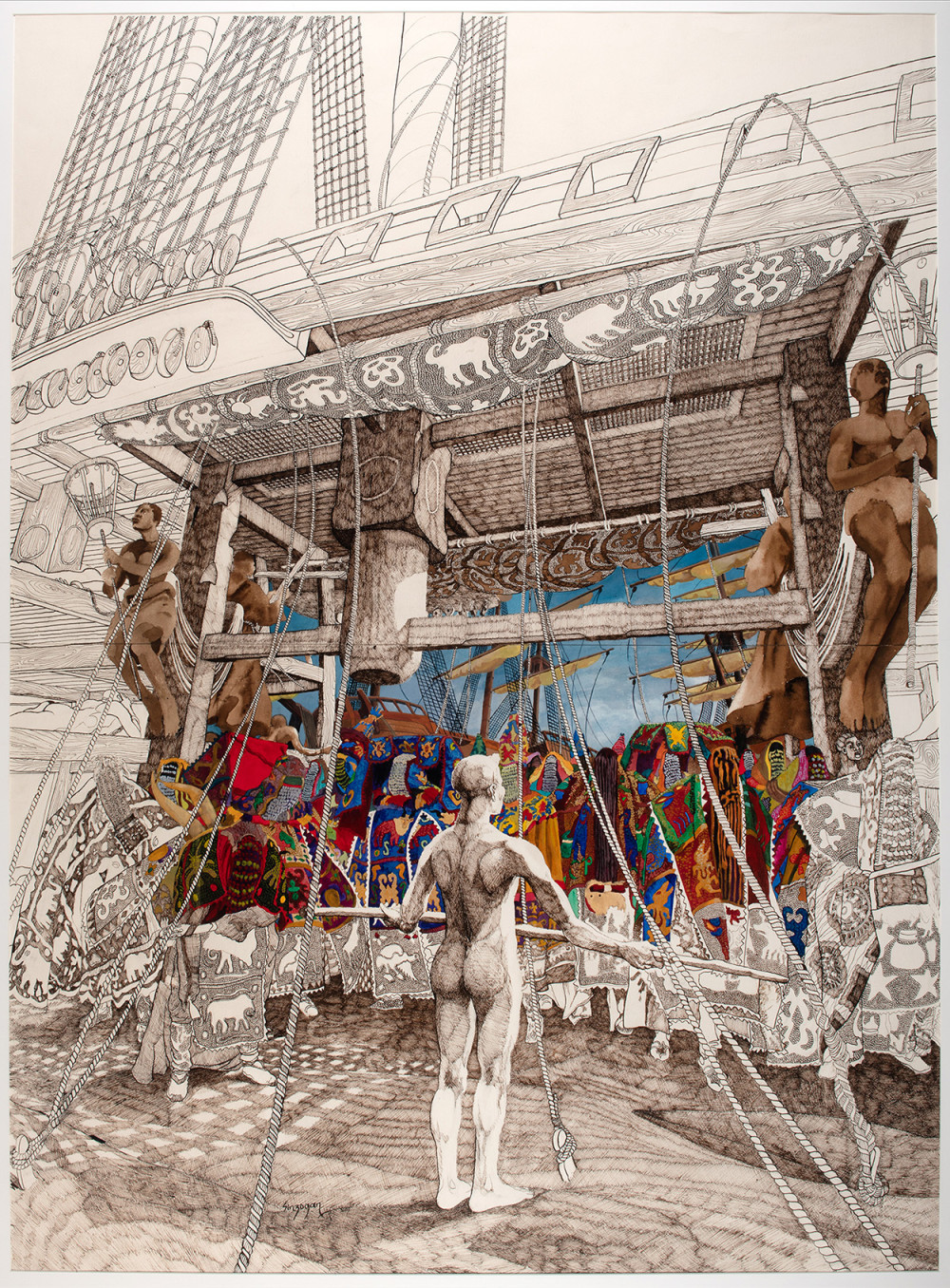
With the title of this painting, artist Julien Sinzogan refers to the Gate of No Return: the passage through which enslaved Africans were taken from fort to ship. Once they had passed through it, they would never return to their homeland. This 2009 painting is part of a series of works centred on the return of the spirits of enslaved people who were taken away. Executed in ink on paper, this work shows a side view of a slave ship.
At the centre of the work are brightly coloured figures. These are egungun, ancestral spirits from the Fon and Yoruba traditions of West Africa. According to these traditions, ancestors remain connected to the world of the living and can make contact with their descendants during rituals. The naked figure holding a stick guards the boundary between the two worlds.
In Sinzogan’s depiction, these spirits symbolically return to the coast of Benin, formerly known as the “Slave Coast.” His “ghost ships” travel the transatlantic route in reverse. Where slave ships once transported people from Africa to the Americas, these ships now bring them back home.
On view in Our Colonial Inheritance, inventory number TM-6411-1.
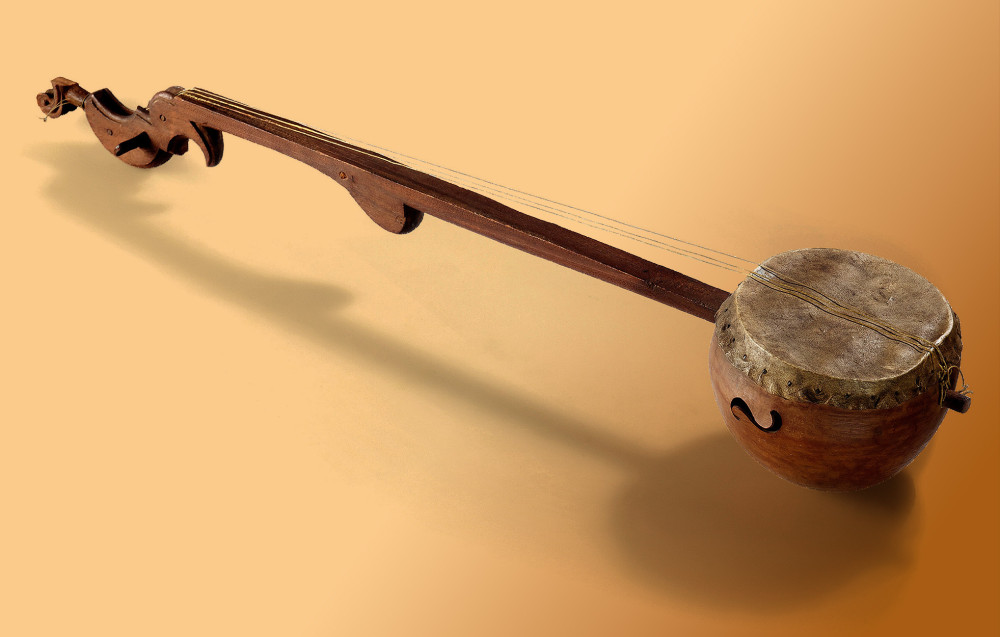
This banjo was made in Suriname around 1770 by an enslaved person. It is the oldest known banjo from the American continent and offers a rare insight into the musical traditions of enslaved communities. The banjo was collected by Gabriel Stedman, a Scottish captain in Dutch service. His accounts and drawings are among the most important sources of information on the period of slavery in Suriname.
The banjo consists of a calabash that serves as the sound box, covered with sheepskin. The neck is made of wood and the instrument has four iron strings. Because a calabash was used, each banjo differs in shape and size.
Instruments like this probably have their origins in West Africa. When drums and wind instruments, which played an important role in African musical traditions, were banned in many colonial areas, enslaved people found new ways to make music. The banjo became an important instrument for relaxation, gathering and continuing musical traditions.
On view in Our Colonial Inheritance, inventory number RV-360-5696.